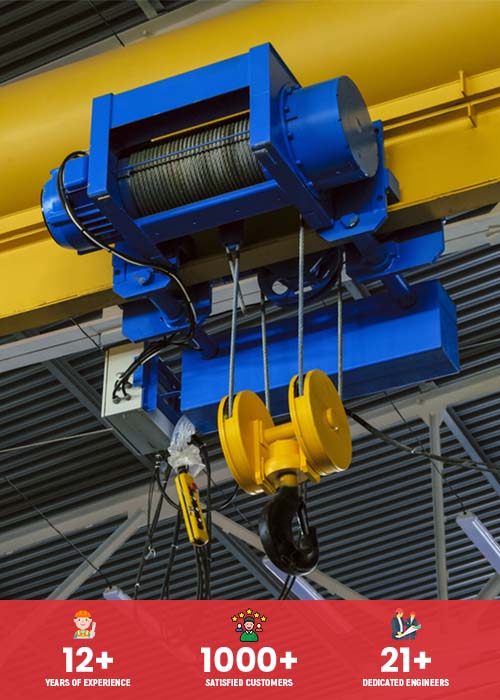

How to Choose the Best Manual Crane Lift for Your Workshop or Warehouse
Picking a lifting tool for a workshop or warehouse looks simple at first, but the moment someone starts exploring options, the whole topic suddenly stretches out in different directions. There are load capacities, wheel types, arm lengths, strange little attachments, and even questions about the floor strength that most people do not think about until the last minute. Some people end up reaching out to the top crane manufacturers in India early because the number of variations starts to feel like a maze that keeps expanding instead of narrowing.
We will discuss how to choose the best manual crane lift for your workshop or warehouse in this article.
Working Of a Manual Crane
A manual crane lift works on basic ideas from crane lifting basics, ideas that have existed for decades, maybe longer. The tool uses human force, applied in a way that multiplies strength, and it forces the operator to be present and steady. A manual crane, regardless of size, still carries the weight of safety and balance. It turns a risky action into something planned, and that alone makes it valuable.
Some workshops prefer manual systems because they bring control and a slower pace, especially when handling items that cannot be rushed. Others like them simply because they do not want the complications of powered tools. In either case, the crane becomes an extension of the team’s routine.
Purpose of the Crane
The biggest factor in choosing a manual crane lift is not the crane itself but the work that surrounds it. Light loads spread through the day feel different from one heavy lift done once or twice. Some teams work with machinery, others with boxes or fabricated parts, and each type of load needs a slightly different approach. This is where crane rigging equipment quietly becomes part of the decision.
A manual crane used for ongoing lifting needs to feel smooth, steady, reliable, and not stiff or unpredictable. Even small details like how far the arm reaches or how easily the crane rolls across the floor become much bigger in real use.
Safety Requirements
No matter how simple a crane looks, rigging safety procedures are the invisible thread holding the whole system together. The crane itself is just one part of the lifting process. The floor must handle the load, the attachment must hold it securely, the operator must stand in the right place, and the travel path must be clear.
Some warehouses even use 3D lift planning services when things get tight or when the load shape is unusual. These planning tools help teams understand how a load moves, turns, and behaves when lifted, especially in smaller indoor spaces.
Movement, Turning, and Real World Behavior
A crane looks stable on paper, but when it enters a busy workshop, everything changes. The wheels have to roll over uneven sections, sometimes over small bumps or cables, and the crane has to turn without forcing everyone to move out of the way. This is where the difference between a good manual crane and a frustrating one becomes obvious.
Some manual cranes glide easily. Others feel heavy and stubborn, especially under load. For warehouses with constant movement, a manual crane needs to be predictable, not something that interrupts the work every time it moves.
Maintenance
People often overlook maintenance because manual systems look simple, but simplicity still needs care. A manual crane has joints, wheels, locks, and chains that wear out. Anyone familiar with crane rental and sales will mention how many cranes fail not because of overloads but because of small issues ignored for too long.
A crane that is easy to maintain becomes an asset. One that needs rare parts or complicated adjustments becomes a challenge over time. Maintenance shapes long-term value more than load charts do.
Guidance From a Professional
Sometimes even after checking the specifications, capacity charts, lifting height, and workspace layout, the decision still feels blurry. This is when experienced professionals can make everything clearer. They understand crane lifting and rigging in practical terms, not just theoretical ones. They know how a manual crane behaves when someone uses it in tight corners or uneven flooring.
Conclusion
Choosing a manual crane lift for a workshop or warehouse comes down to understanding the work style, the safety needs, the movement pattern, and the long term reliability expected from the equipment. When all these factors mix together, the right crane usually becomes easier to recognize. A manual crane gives steady control, predictable movement, and a kind of simplicity that many teams rely on. With the right planning, the right rigging habits, and occasional expert input, the crane becomes a tool that blends naturally into the daily routine.