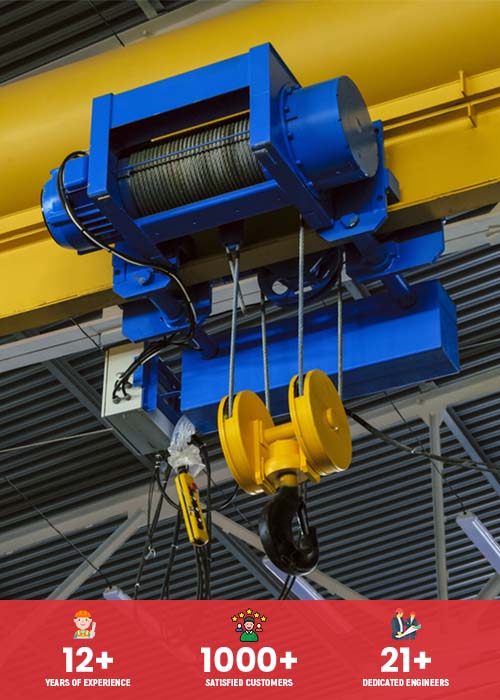

Is Upgrading to an Electric Hoist Really Worth the Investment?
When businesses think about improving their material handling system, the first question is always about money. Not just cost, but return. Many companies that work with hoist manufacturers in Ahmedabad often ask the same thing, how long will it take to recover the investment? That is a fair concern. Buying an electric hoist is not a small expense. But the bigger picture is not about the buying price alone. It is about how much smoother your daily operations become. When lifting becomes faster, safer, and less tiring, the impact slowly starts showing in real numbers.
The Hidden Cost of Staying with Manual Systems
At first, manual lifting systems look affordable. There is no motor, no power use, and the price is lower. But after some months of daily use, reality feels different. Manual hoists take more time for every lift that means workers need effort, coordination, and often extra support. That means more labor hours for the same task. When production targets are tight, even small delays can create pressure. Over time, these small delays turn into serious productivity loss. Many businesses do not calculate this hidden cost properly. They see only purchase price, not the long term operational effect.
Looking at Cost Savings with Electric Hoist in Real Terms
Now let us talk about cost savings with electric hoist systems in a practical way. Imagine a task that earlier required two or three workers. With an electric hoist, one trained operator can handle it smoothly. That immediately reduces labor involvement. Less physical effort also means fewer mistakes while lifting heavy loads. Damage to materials reduces. Rework reduces. All of this adds up quietly. Maintenance costs are also more controlled because modern electric hoists are built with stronger parts. When you calculate yearly savings from labor, repairs, and material handling errors, the numbers start becoming quite convincing.
Energy Use Is Not as Expensive as Many Assume
One common fear is electricity bills. People assume powered equipment must consume heavy energy. But an energy-efficient hoist is designed to use power only when lifting is happening. It does not run continuously without purpose. Compared to the time and manpower spent in manual operations, the actual electricity cost is often lower than expected. In fact, smoother motor operation reduces mechanical stress. That means fewer part replacements. Less mechanical wear also means fewer sudden breakdowns. Over several months, energy savings combined with reduced downtime create a noticeable financial difference.
Productivity Improvement with Hoist Feels Immediate
Productivity improvement with hoist technology is something you can actually see within days of installation. Lifts happen faster. Loads are positioned accurately. Workers do not struggle or feel exhausted after repetitive tasks. When physical strain reduces, focus improves. And when focus improves, work quality improves. Production lines do not wait for manual adjustments. Material flow becomes smoother. In busy factories, even saving a few minutes per lift makes a huge difference by the end of the week. Higher output without increasing staff is a direct contribution to profitability, and that is a strong factor in overall industrial hoist ROI.
Understanding Payback Period in Practical Terms
When people hear the word ROI, it sometimes feels technical or complicated. But honestly, the payback period is a very simple idea. It just means how long it takes for your savings to cover what you spent. If your electric hoist helps reduce labor hours, prevent damage, and avoid frequent repairs, those savings start adding up month after month. In many real factory setups, businesses begin seeing recovery within a couple of years, sometimes even earlier depending on usage. After that point, the equipment is no longer just recovering cost. It is actively contributing to profit.
Long-Term Gain Over Short-Term Spending
It is easy to focus on the invoice amount. But smart businesses look at performance over five or ten years. When you add reduced labor dependency, better efficiency, fewer injuries, lower downtime, and smoother workflow, the long term benefit becomes clear. Electric hoists support growth. They make expansion easier because the lifting system can handle higher load demand without increasing manpower. That flexibility supports future scaling. When operations grow, the equipment already supports that growth instead of limiting it.
Conclusion
So when you step back and look at the bigger picture, the decision is not only about the purchase price. It is about how your daily work feels after the upgrade. An electric hoist does not suddenly double your profits overnight. That is unrealistic. What it does is remove small inefficiencies that slow you down every day. Lifts become quicker. Workers feel less physical strain. Over months, these steady improvements reflect in numbers. That is how industrial hoist ROI actually builds, slowly but surely.