
What Factors Affect EOT Crane Prices in India?
Purchase of the EOT crane is not an easy task for any factory owner or manager. The first thing that always pops into the mind when purchasing such equipment is, “Why are the prices different?”
But to be honest, the price for an EOT crane is not set in stone. There are many different criteria that influence the price, including technical specifications and the real operational conditions of the specific crane. If you have to compare different quotes and find the good EOT crane manufacturers in Ahmedabad, then you should know about these influencing factors.
This guide provides the important factors that affect EOT crane prices in India and things to consider before making a purchase.
1. Lifting Capacity
This is usually the first thing that decides your budget. The heavier the load, the stronger everything needs to be: girders, motors, hoists, and brakes.
Standard lifting capacities are:
- 1–5 tons
- 5–10 tons
- 10–20 tons
- 20–50 tons
- Over 50 tons
The 20-ton crane is bound to be more expensive than a 5-ton crane due to its increased material content.
2. Crane Span
Span is the distance between the two rails your crane travels on. A wider span means:
- Bigger girders
- More steel
- Extra fabrication
- Precise alignment
The wider your workshop, the more it costs to bridge that gap safely.
3. Lift Height
The height that the hook will have to rise influences prices as well. Higher lifts need:
- More wire rope
- Larger drums
- Sturdier hoists
- Additional safety systems
Facilities with high ceilings or several floors tend to end up paying more because of this factor alone.
4. Type of EOT Crane
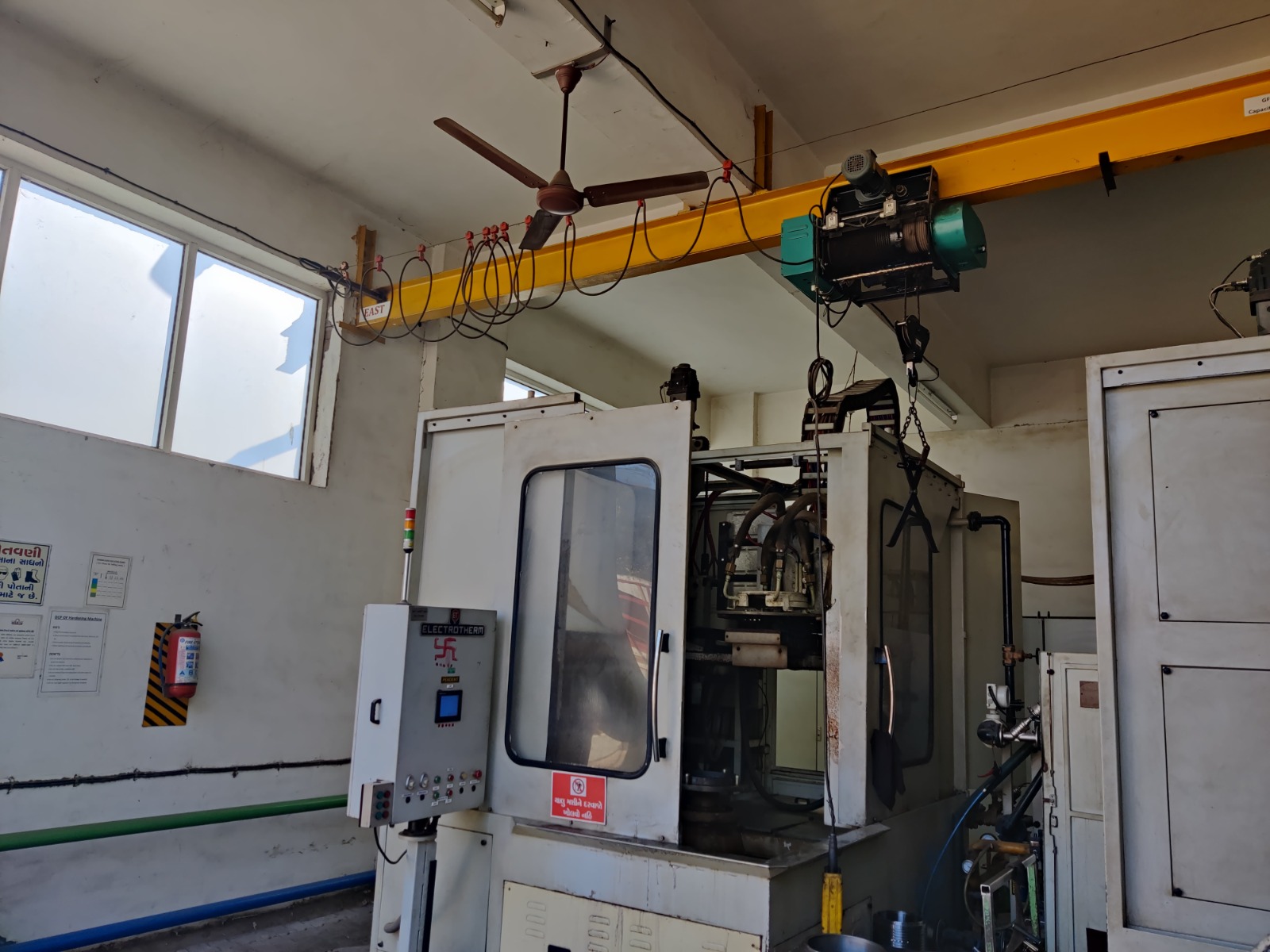
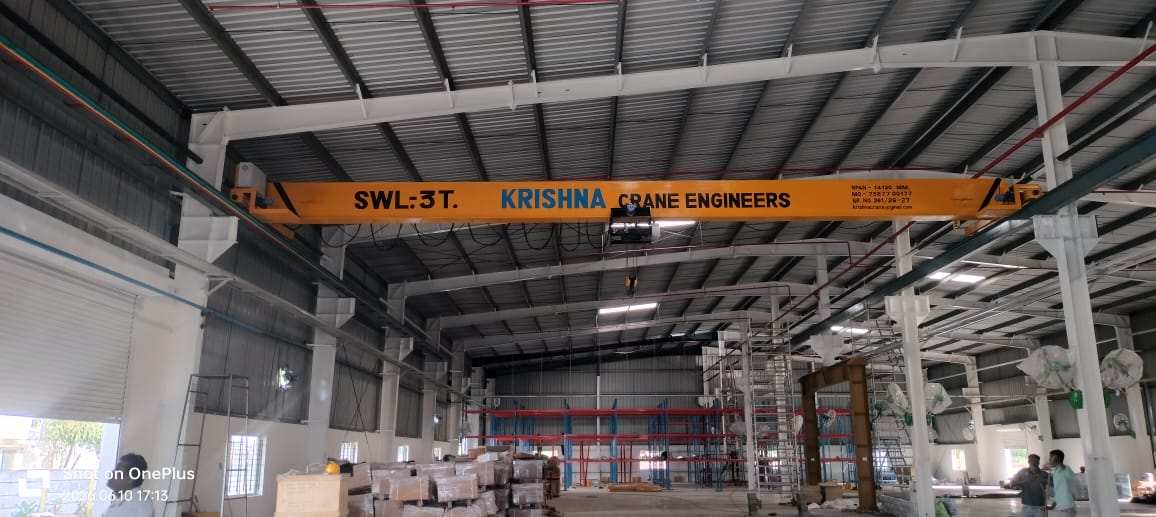
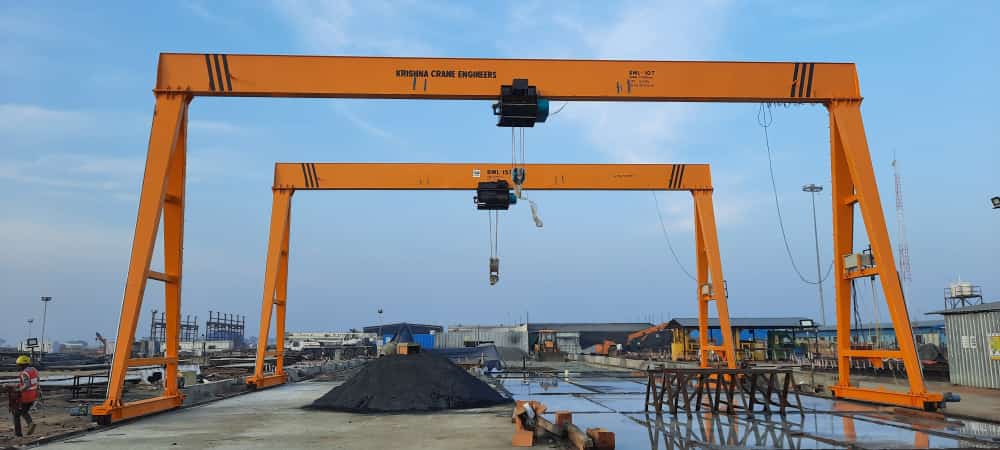
Single Girder EOT Crane
Suitable For:
- Workshops
- Warehousing
- Applications where duty is low
Advantages:
- Inexpensive
- Simple to install
- Little maintenance needed
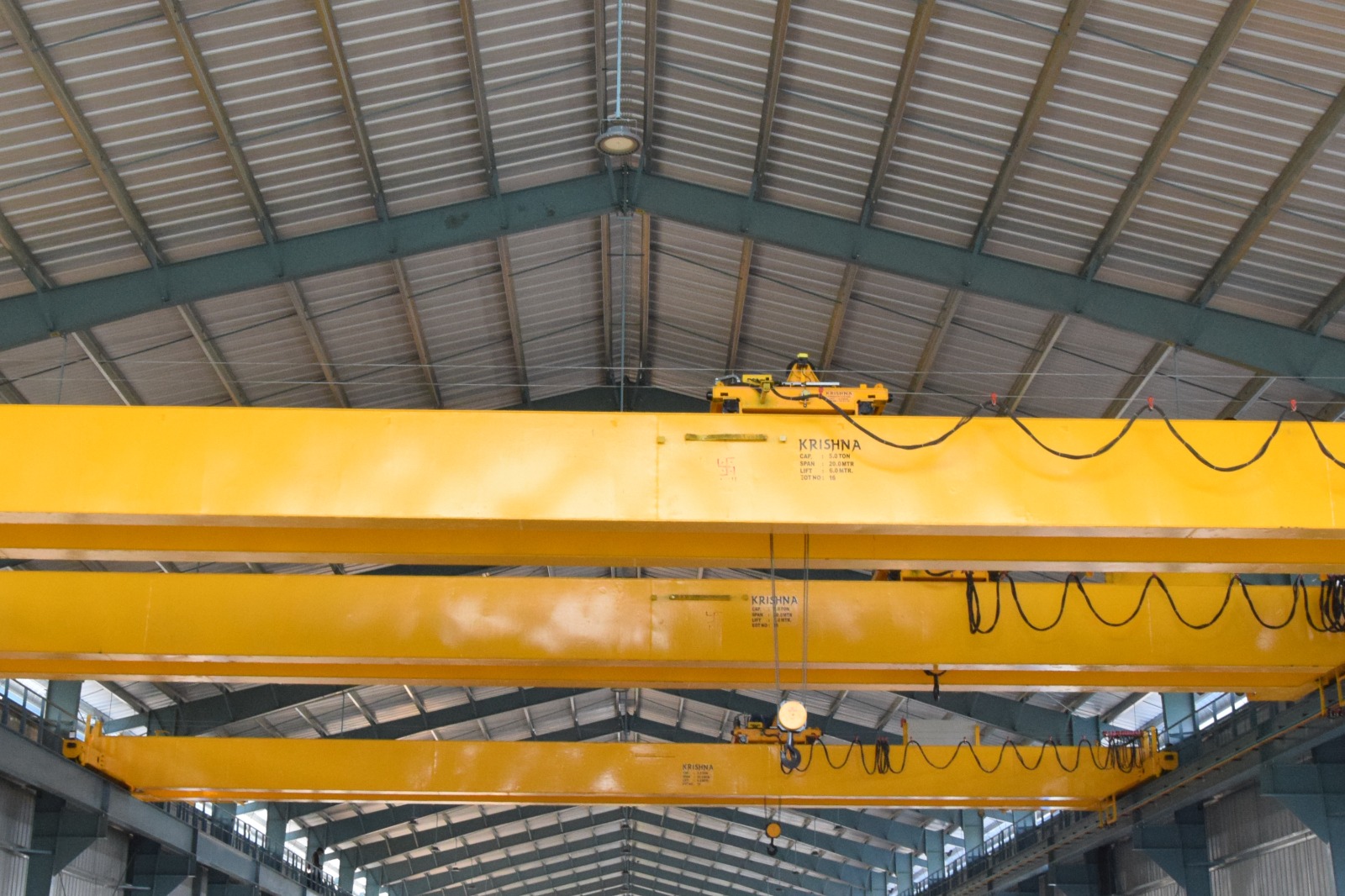
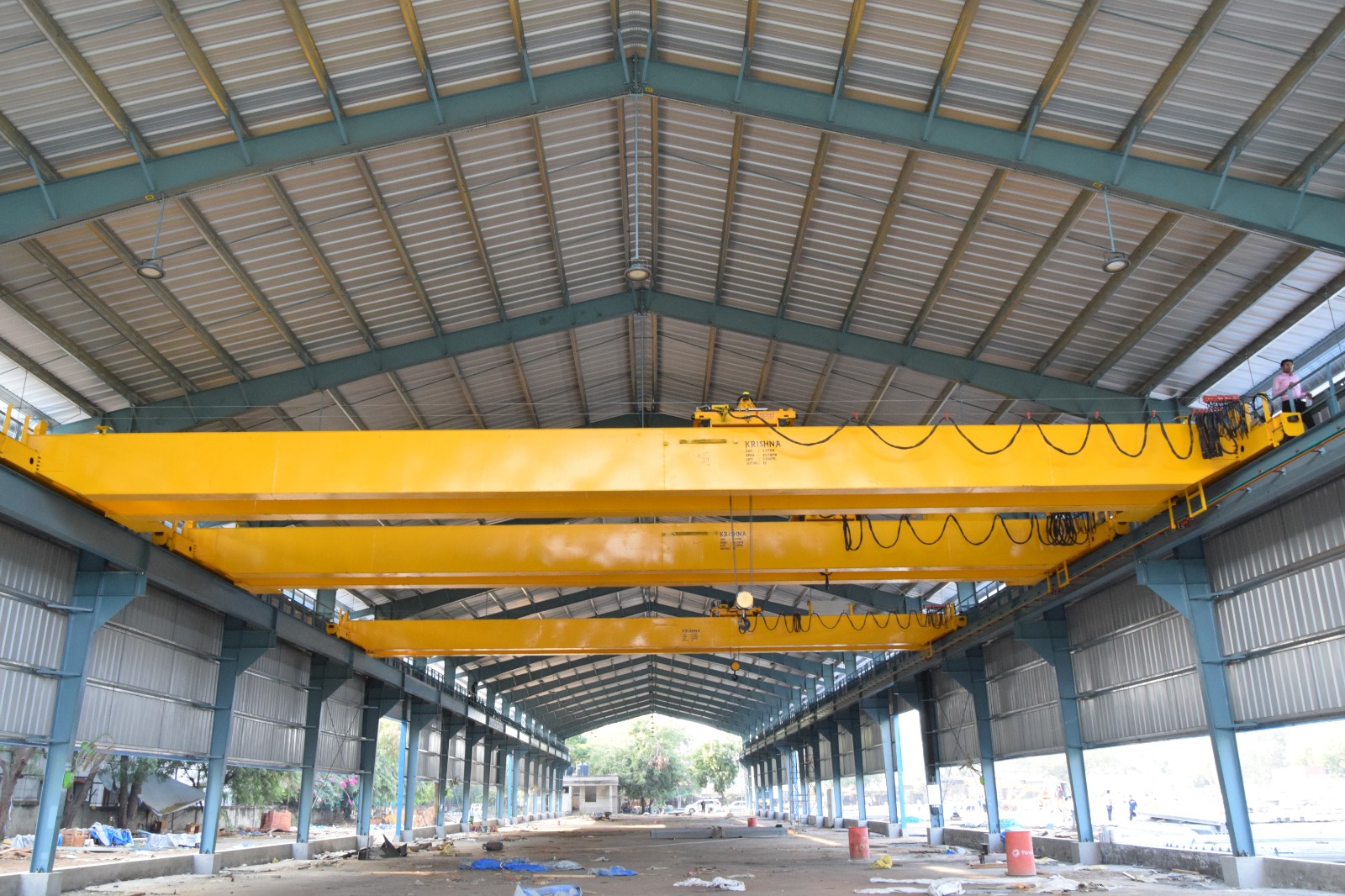
Double Girder EOT Crane
Most Suitable For:
- Steel Works
- Foundry Plants
- Heavy Duty Manufacturing Industries
These cranes are relatively expensive since they lift huge loads.
5. Duty Class and Usage Frequency
Not every crane runs the same number of hours a day. A crane working three shifts non-stop needs much sturdier components than one used occasionally.
Heavy-use cranes need:
- Stronger motors
- Better gearboxes
- Durable brakes
- Reliable wiring
The tougher the job, the higher the build quality needs to be and that shows up in the price.
6. Quality of Materials
This is where prices can swing quite a bit between vendors. Better cranes typically use:
- IS-standard steel
- Strong wire ropes
- Quality bearings
- Branded electricals
- Rust-resistant coating
Yes, it costs more upfront. But it usually means fewer breakdowns and lower repair bills later.
7. Hoist Type
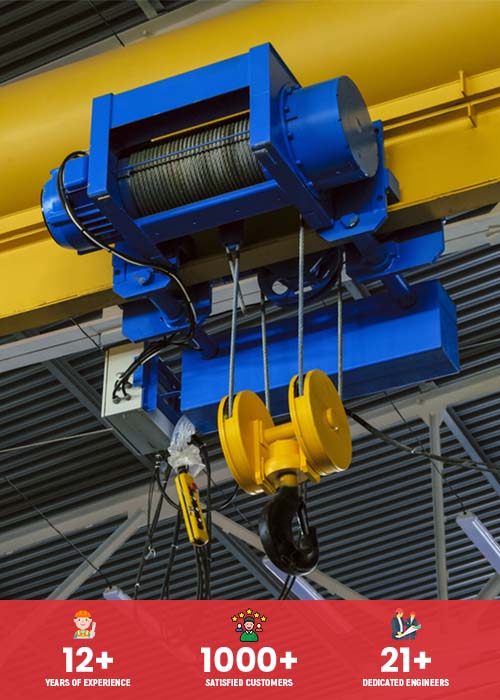
The hoist lifts the load; thus, its efficiency plays a key role. They include the following types:
- Electric wire rope hoist
- Chain hoist
- Special hoists for heavy duty
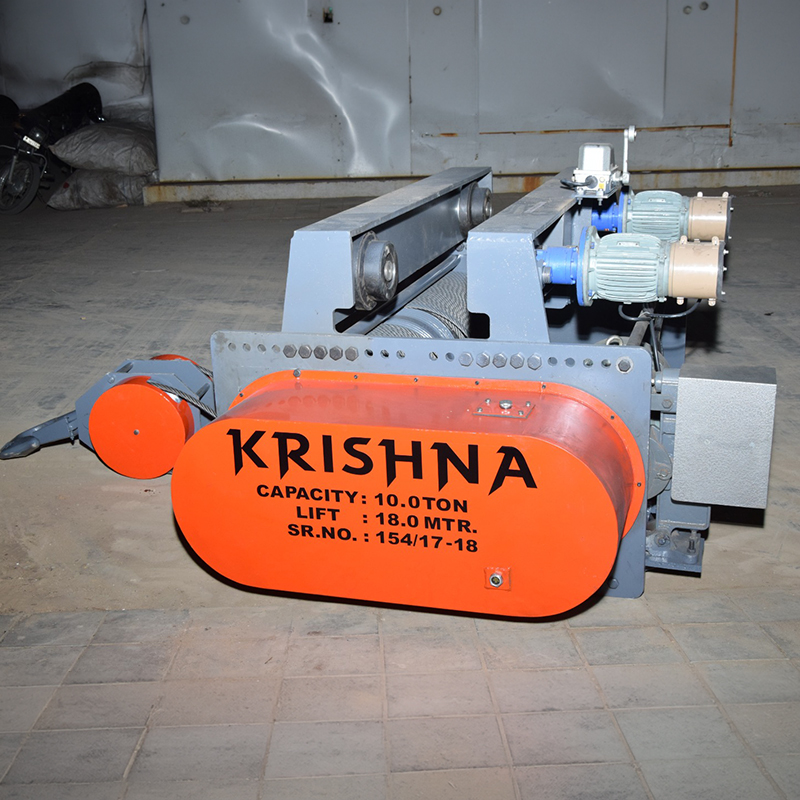
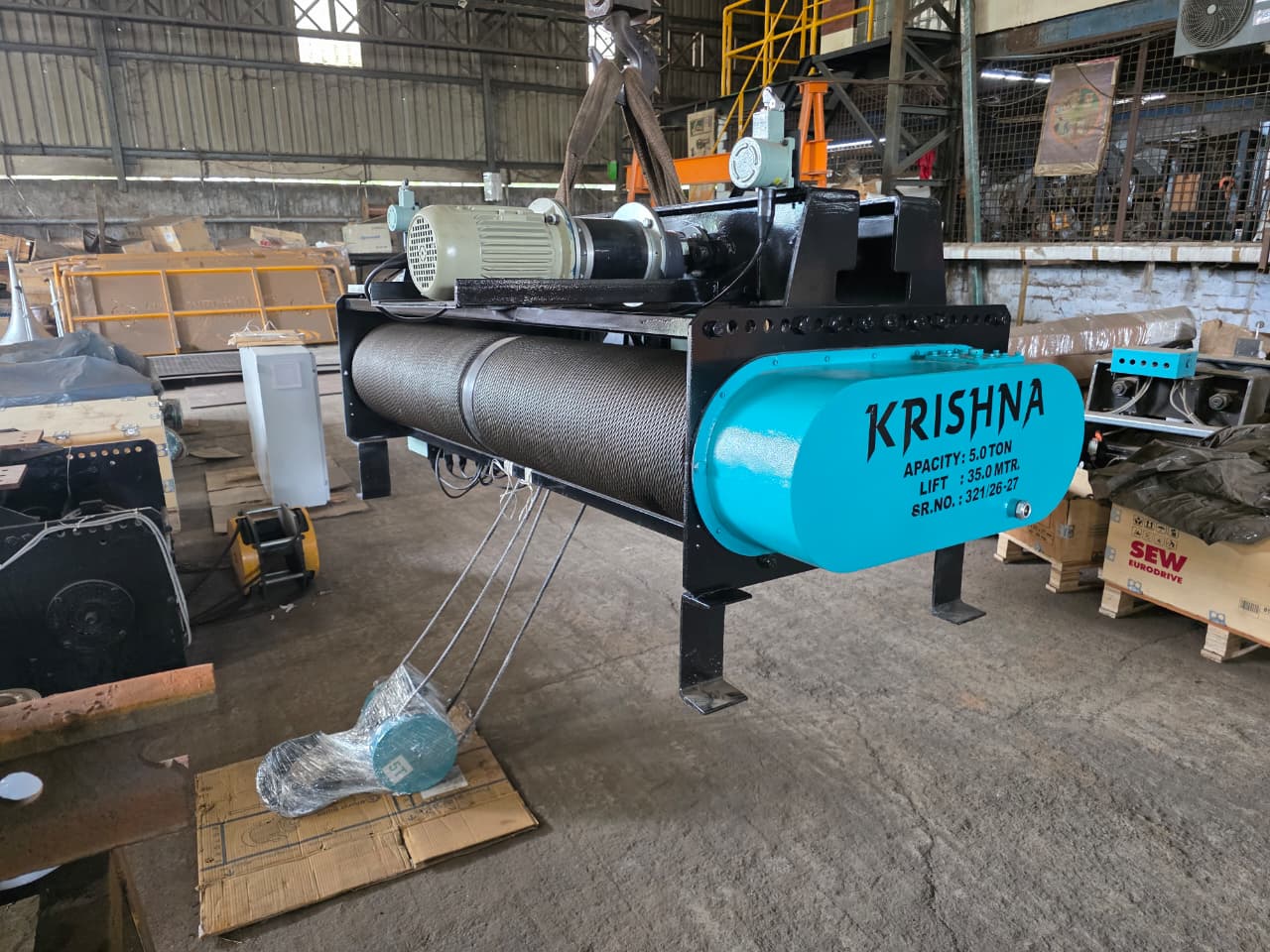
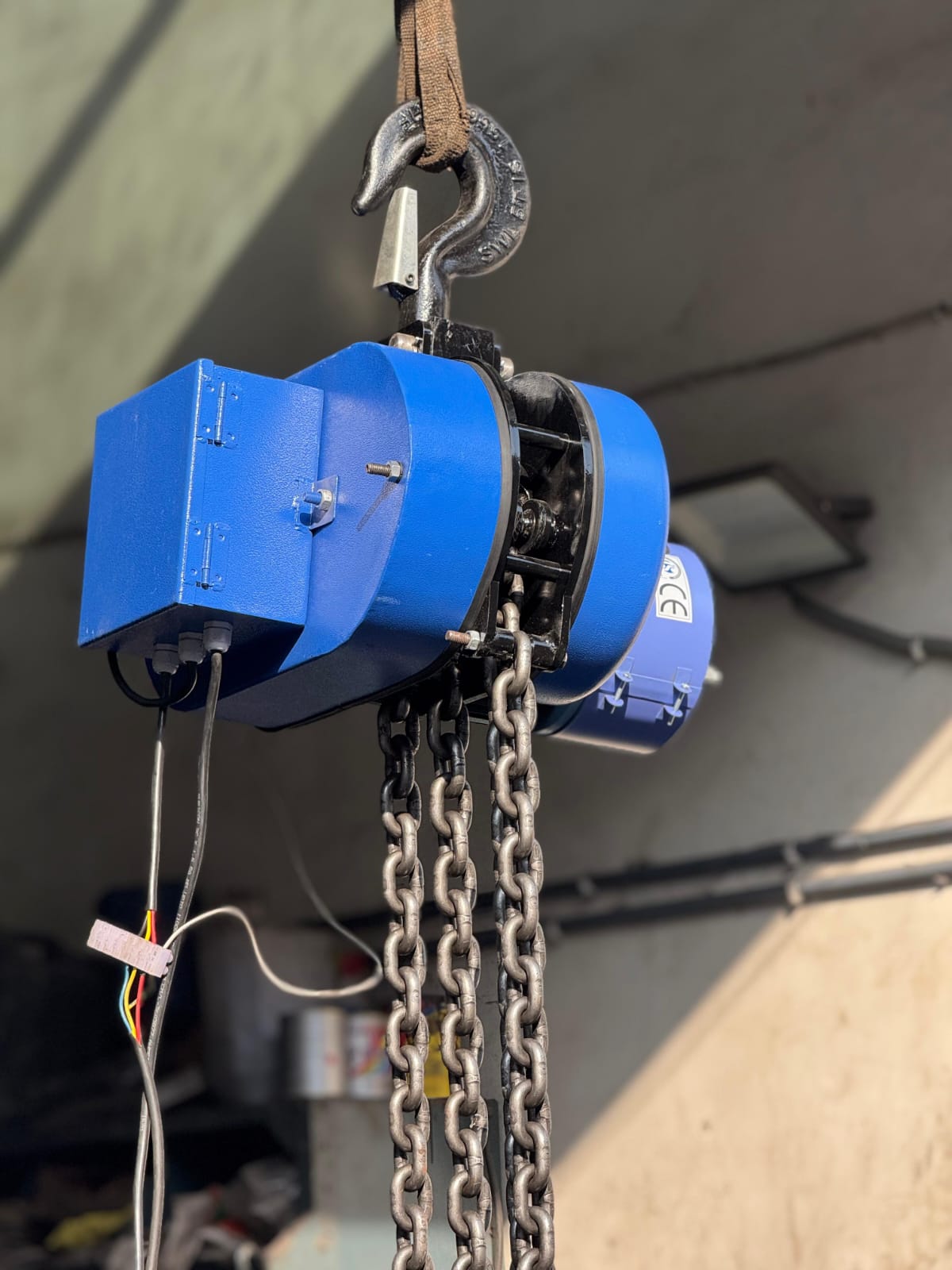
The electric wire rope hoist is more expensive than the chain hoist but more efficient when working with larger loads.
8. Automation Features
More factories are opting for smarter, safer cranes these days. Popular add-ons include:
- VFD drives
- Remote controls
- Radio controls
- Anti-collision systems
- Load monitoring
- PLC automation
Each feature adds to the price but also adds to safety and efficiency on the floor.
9. Installation Requirements
The cost of the crane itself constitutes a portion of the cost. Costs related to installation include:
- Runway
- Building height
- Structure modifications
- Wiring
- Inspections
- Testing
An older facility with an existing system will pay less than a new facility that needs everything installed from scratch.
10. Compliance with Indian Standards
Indian market cranes have to be able to satisfy safety and quality standards. That includes:
- Load testing
- Quality assurance
- Safety certification
- IS compliance
This adds a little cost, but it is what will keep your crane and crew safe.
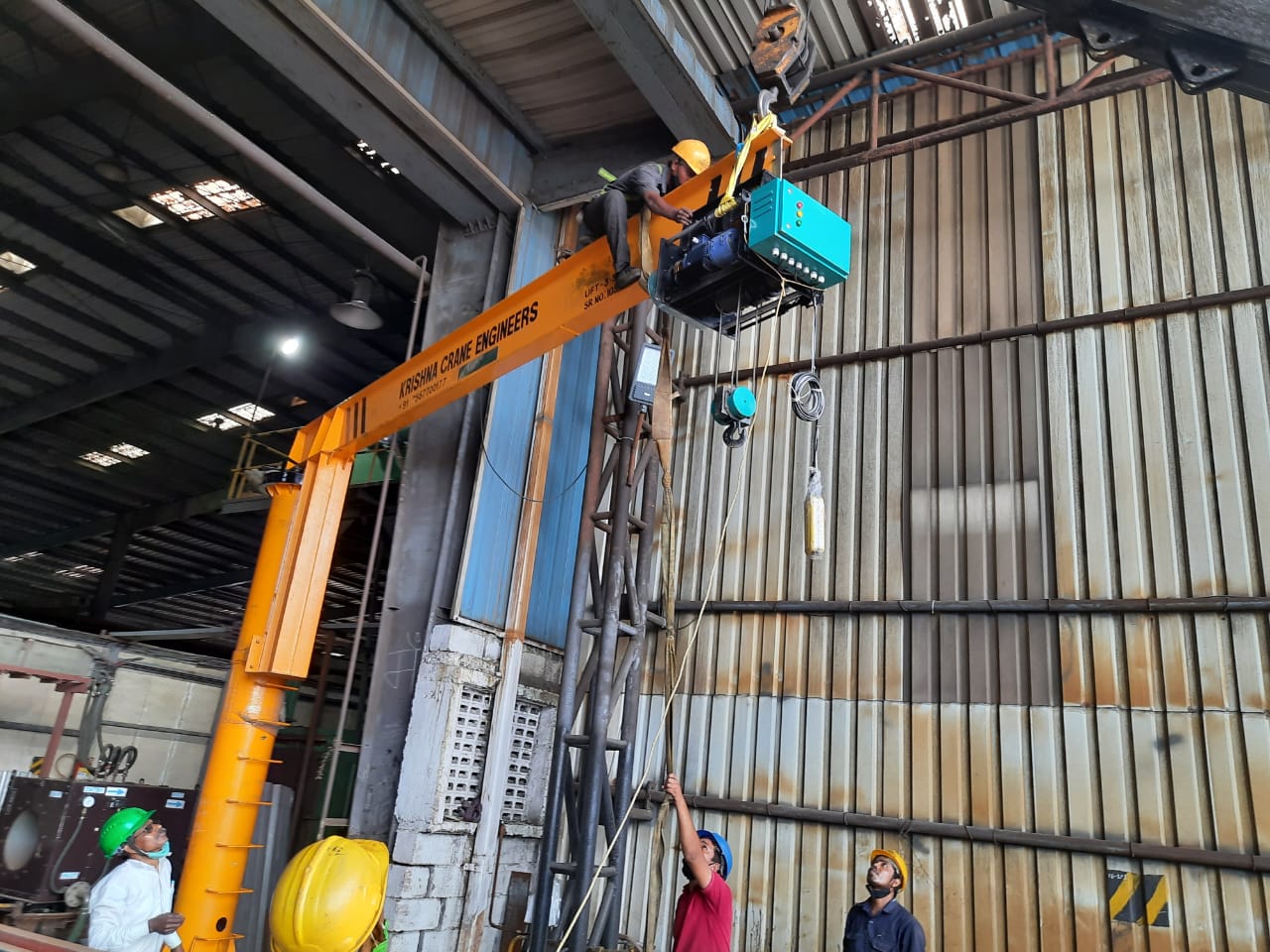
11. Customisation Requirements
There are also some cases where cranes have to be manufactured specially to suit certain conditions, such as:
- Specialized attachments
- Explosion-proof construction
- Dust-proof design
- Heat-resistant design
- Weather-proof design
- Special coatings
As the crane is more customized, the engineering involved becomes greater; hence, the cost also rises.
12. Brand Reputation and Expertise
A well-established manufacturer always focuses on the aspect of engineering and quality control. This leads to:
- Reliability
- Longevity
- Prompt spare parts
- Actual customer support
- Minimum downtime
And that’s precisely why so many people compare the well-established EOT crane manufacturers before settling for the cheapest bid.
13. Transportation and Logistics
Cranes are big and need to be transported carefully. Costs here depend on:
- Delivery distance
- Crane size
- State taxes
- Handling gear
- Site access
Shipping a crane from Ahmedabad to Chennai or Guwahati, for instance, will obviously cost more than delivering it within Gujarat.
14. Current Steel Prices
Steel is a major chunk of what goes into building a crane. When steel prices move, crane prices tend to follow.
Copper, electricals, and imported parts can shift pricing too, depending on market conditions at the time.
Estimated EOT Crane Price Ranges in India
| Crane Type | Approximate Price (INR) |
| Single Girder (1–5 T) | ₹3 lakh–₹8 lakh |
| Single Girder (5–10 T) | ₹6 lakh–₹12 lakh |
| Double Girder (10–20 T) | ₹12 lakh–₹30 lakh |
| Heavy Duty Double Girder | ₹30 lakh+ |
These are rough figures; actual pricing depends on your exact requirements.
Practical Tips Before Requesting a Quotation
Before you contact a manufacturer, have this ready:
- Lifting capacity
- Span length
- Lift height
- Daily usage
- Indoor/outdoor
- Industry type
- Power supply
- Control preference
- Safety needs
The clearer your brief, the more accurate and fair your quote will be.
Common Mistakes That Increase EOT Crane Costs
It is common for consumers to spend beyond their means unknowingly. Be careful when:
- Selecting the cheapest offer
- Failing to account for growth in the future
- Undervaluing the capacity
- Omitting service check
- Neglecting maintenance
- Lack of site preparation
- Excess automation
Conclusion
The cost of EOT cranes in India depends on far more than just the capacity of the crane. Other factors that affect the final cost include span, height of lift, duty cycle, material, automation, and even the rate of steel in the market.
When searching for a good deal, one should look at reliability, safety and compatibility with the operation process rather than the cheapest solution. If you are looking for EOT crane manufacturers in Ahmedabad then keep cost aside and look for their expertise, quality of construction, compliance and service.
Frequently Asked Questions
Why do EOT crane makers in Ahmedabad provide different pricing?
Due to variation in material, component, engineering, safety, guarantee and customisation factors.
Will an expensive EOT crane automatically be of high quality?
No. Check for specifications, safety measures, services and component quality, not the price only.
What is the cost of an EOT crane in India?
It varies from ₹3 lakhs to ₹30 lakhs, based on the lifting capacity of the crane and other parameters.
What are the main factors that influence the pricing of an EOT crane?
Lifting capacity and span are the foremost parameters, followed by duty cycle, customisation, and automation.
How can one save on the costs of EOT cranes without compromising on quality?
One should communicate his/her requirement, compare, choose only essential features, and team up with reliable EOT crane manufacturers of Ahmedabad.