
5 Critical Jib Crane Operating Mistakes: Insights from a Jib Crane Manufacturer in India
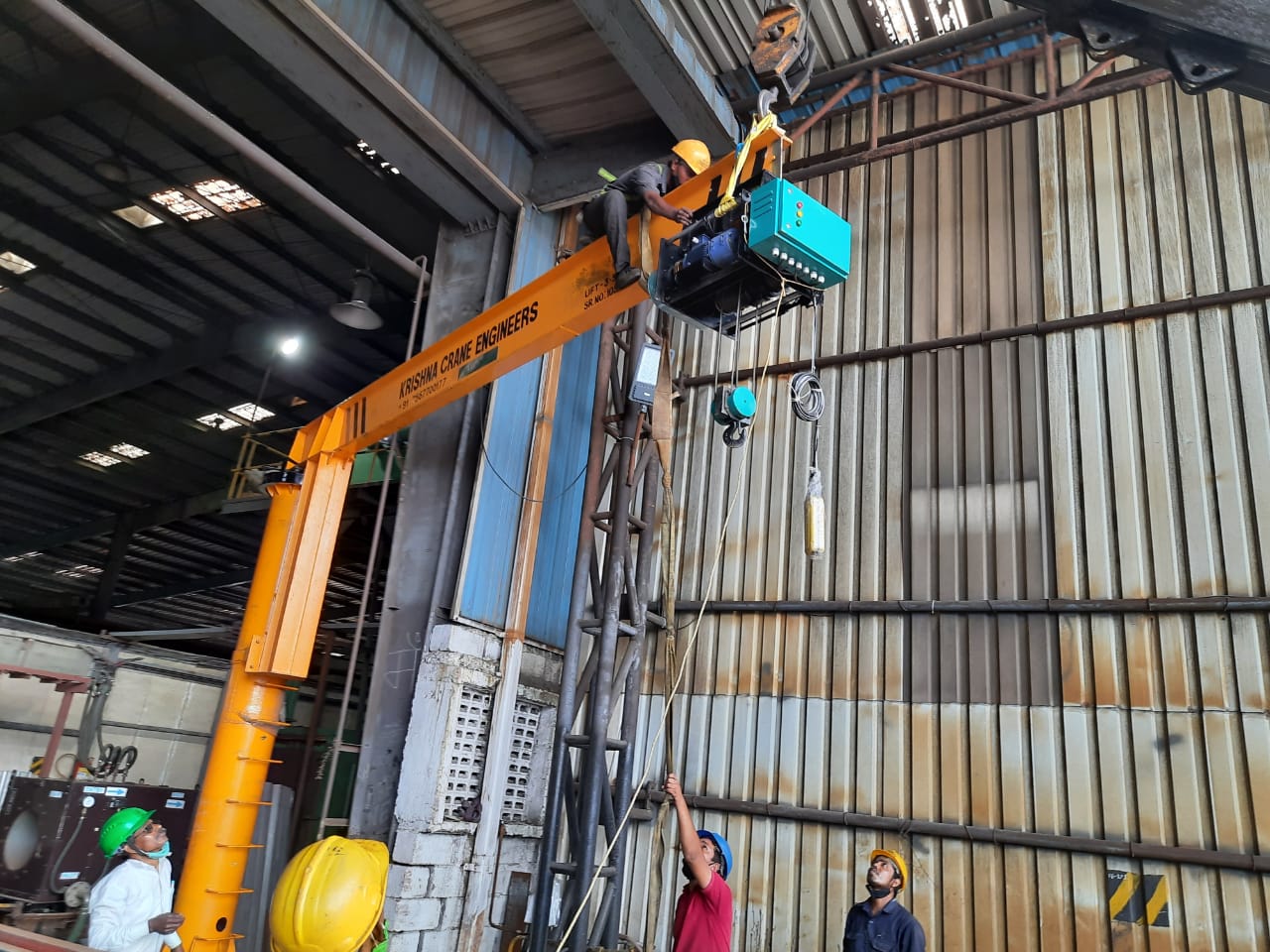
A jib crane takes the strain out of material handling. It lifts and moves loads within a fixed area, which is why you see it in Indian factories, workshops, warehouses and assembly lines where floor space is tight.
But a good crane can still turn risky in the wrong hands. Any jib crane manufacturer in India will tell you the same thing: safe lifting depends on the operator, the routine and the upkeep as much as the machine.
Small slips, like lifting a tilted load or brushing off a strange noise, often lead to damaged equipment, lost production hours and injuries. Here are five mistakes to watch for, and simple ways to avoid them.
1. Overloading the Crane Beyond Its Capacity
“Just a little extra” is how most overloads begin. Operators assume a few more kilos will not matter. They do. Extra weight strains the boom, hoist, mast and foundation, even when nothing looks wrong.
The danger grows when the load hangs at the outer end of the arm, because bending forces are highest there. Over time, this can bend the structure or make the crane unstable.
How to avoid it:
- Check SWL marking
- Add accessory weight
- Never guess weights
- Match capacity to need
- Learn overload warning signs
Picture a Rajkot workshop lifting 750 kg machine parts on an undersized crane to save money. It works for months, then cracks appear. Buying the right capacity upfront costs far less than that repair.
2. Ignoring Load Balance and Incorrect Slinging
Every load has a centre of gravity. If the hook sits away from it, the load tilts the moment it leaves the floor.
Odd shapes cause the most trouble: fabricated frames, steel sections, and machine parts. A wrong sling position can make a load slip, hit nearby machines or put uneven pressure on the hoist.
How to avoid it:
- Find centre of gravity
- Use rated slings
- Inspect shackles and hooks
- Secure the load
- Test lift first
In an Ahmedabad fabrication unit, a steel component tilts as soon as it lifts because the sling sits near one edge. Stopping, lowering and correcting takes a minute. Ignoring it can mean a serious injury.
3. Moving Loads Too Quickly or Allowing Excessive Swinging
Fast is not the same as efficient. Jerky arm rotation, sudden hoisting or sharp turns set the load swinging like a pendulum.
On a busy shop floor, that swinging load can hit workers, racks or machines. It also sends shock into the bearings and gears, which shortens the life of the crane.
How to avoid it:
- Go slow
- Avoid stopping suddenly
- Allow for settling of the load
- Clear all people
- Give clear hand signals
Also be aware of the work range and limitations on rotations. The wall-mounted crane and pillar-mounted crane have different operations.
4. Skipping Routine Inspections and Preventive Maintenance
A crane may look fine but problems occur slowly. Worn ropes, cracked hooks, loose bolts and odd sounds are early warnings. Ignore them, and a small fix becomes a costly breakdown.
This matters even more in plants that run several shifts a day.
What to inspect:
- Ropes or chains
- Hooks and latches
- Hoist and trolley
- Boom and structure
- Pendant and cables
Keep a simple routine: daily visual checks, scheduled servicing and a detailed examination by a competent person.
Section 29 of the Factories Act, 1948 covers lifting machines, chains, ropes and tackles.It is to be reviewed by an authorised person at least once per year, or before if prescribed by the Chief Inspector. Please also consult your state factory regulations.
5. Operating Without Proper Training or Workplace Coordination
Even a top-quality crane cannot protect an untrained operator. Whoever holds the pendant must know the controls, load limits, working area and emergency steps.
Coordination matters just as much. An operator may start a lift while a rigger is still fixing the sling, or a worker is standing under the load. In crowded factories, this happens more often than anyone admits.
How to avoid it:
- Authorised operators only
- Regular refresher training
- Clear hand signals
- Restricted lifting zones
- Know emergency stops
- Never lift over people
Write simple operating procedures for routine lifts too. Written steps beat assumptions every time.
How Can Businesses Improve Jib Crane Safety?
Safe lifting comes from the right crane, trained people and steady habits. A few practical steps:
- Pre-shift checklist
- Visible load capacity
- Inspection records
- Clear lifting area
- Replace damaged parts
- Follow the manual
When buying a crane, think about capacity, boom length, rotation angle, mounting and how often it will run. An experienced jib crane manufacturer in India can help you work through these before you decide.
What Should You Check Before Choosing a Jib Crane?
Choosing well matters as much as operating well. Look at:
- Lifting capacity: heaviest expected load
- Working radius: full reach
- Mounting type: pillar or wall
- Environment: dust, moisture, heat
- Maintenance support: spares, servicing
Where capacity changes with the jib angle, safety rules may require a load or jib-angle indicator.
Frequently Asked Questions
- What is the most common mistake made while handling a jib crane?
Overloading is considered one of the most dangerous mistakes that can be made while operating. Overloading leads to the wear and tear of the structure. - What is the frequency of the inspection of the jib crane?
Visual inspection needs to be done prior to every shift, while competent personnel need to do the inspection at least once a year according to Section 29 of the Factories Act. - Can a jib crane carry an uneven or irregular load?
Yes, if the weight of the load does not exceed the capacity of the jib crane and appropriate lifting tools are available. - Which safety measures should be included in a jib crane?
Reliable brakes, emergency stop, limit switches, hooks with safety latches and overload protection where required. Needs vary by design and application. - How to select a proper jib crane manufacturer for my business?
Select a company having appropriate experience, detailed specifications, good quality parts, and reliable post-sales service support. Additionally, ensure that the equipment complies with Indian safety standards
Conclusion
Safe jib crane operation comes down to everyday decisions. Overloading, bad slinging, rough movements, skipped maintenance and untrained operators are all avoidable.
Suitable equipment, regular inspections and trained operators protect both your people and your machines.
Planning a new installation or an upgrade? Hoistsandcrane.com can help you find lifting solutions that suit your application. Visit the website and share your requirements.